
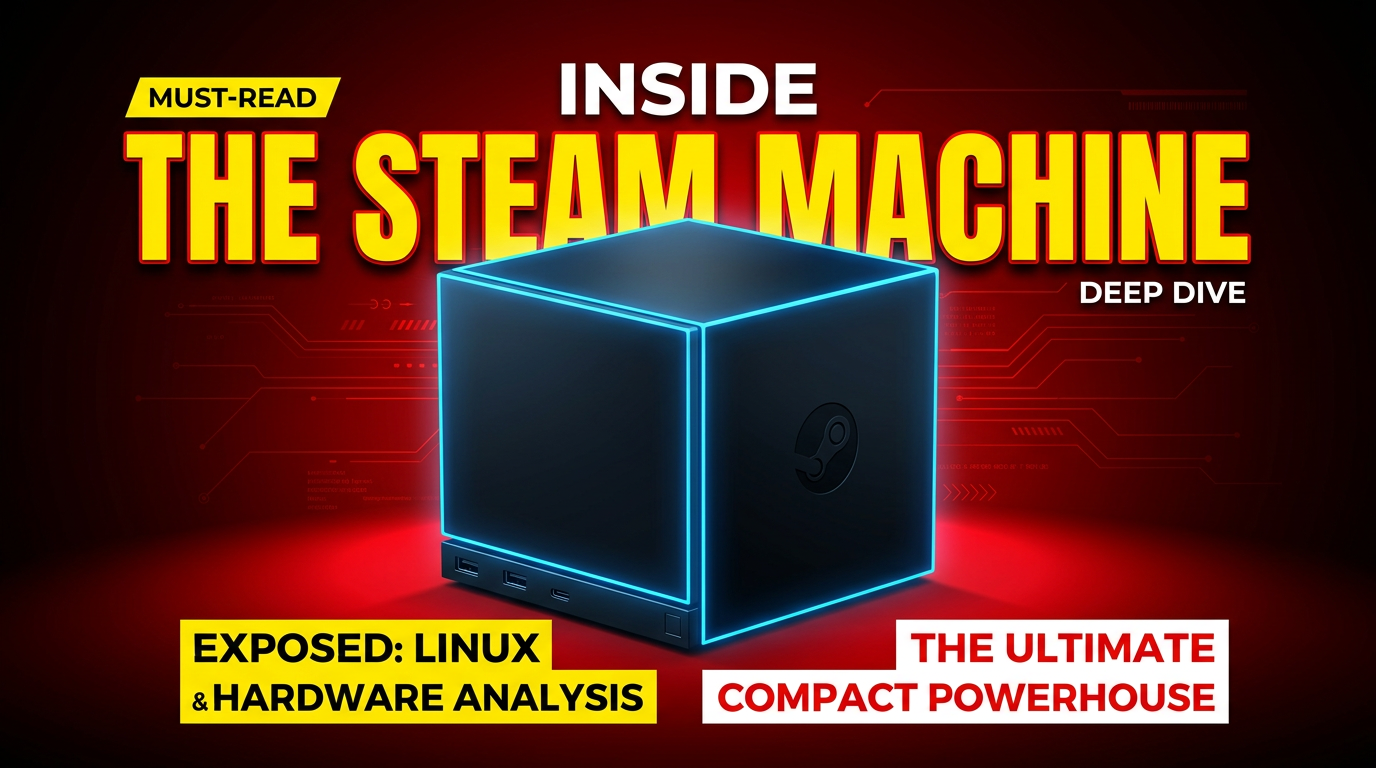
Valve's 2026 Steam Machine launches on June 29th for a premium $1,049 base price. This compact powerhouse, affectionately dubbed the "GabeCube," packs impressive specs, featuring a custom AMD Zen 4 CPU and RDNA 3 GPU capable of pushing consistent 4K/60fps gaming. While the high cost reflects current global hardware shortages, Valve compensates with highly pro-consumer, modular internals—including user-upgradable DDR5 RAM and standard M.2 NVMe storage. For PC enthusiasts and living room gamers alike, the new Steam Machine offers the plug-and-play convenience of a traditional console combined with the open ecosystem, free multiplayer, and upgradability of a Linux PC.
When Valve announced they were finally returning to the living room, expectations for the reputed organization were immense. Now that the 2026 Steam Machine is here, which is launching on June 29th with a base price of $1,049, the community is reeling from the shock of the price tag.
However, looking past the price tag, it’s quite an engineering marvel. Valve has crammed a fully capable, 4K-ready gaming PC into a tightly integrated 6-inch box the community has affectionately dubbed the ‘GabeCube’.
Let's look into the custom AMD silicon, the internals, and whether this tiny powerhouse justifies its premium price.
The Spec Sheet at a Glance
Component | Specification |
CPU | Custom AMD Zen 4 (6-core, 12-thread, up to 4.8 GHz, 30W TDP) |
GPU | Custom AMD RDNA 3 (28 CUs, up to 2.45 GHz, 110W TDP) |
Memory | 16GB DDR5 5600 SO-DIMM (User Upgradable) + 8GB GDDR6 (GPU) |
Storage | 512GB or 2TB standard M.2 2280 NVMe SSD |
Connectivity | 2x2 Wi-Fi 6E, Bluetooth 5.3, Gigabit Ethernet, USB-C 3.2 Gen 2 |
Size | 152 mm tall, 162.4 mm deep, 156 mm wide |
Weight | 2.6 Kgs |
OS | SteamOS 3 |
Table 1: Specifications of The Steam Machine
The Brains: Custom Zen 4 and RDNA 3
At the heart of the Steam Machine is a semi-custom AMD APU designed specifically for this thermal envelope.
The 6-core, 12-thread Zen 4 CPU clocking up to 4.8 GHz ensures that heavily physics-bound or CPU-intensive simulation games won't bottleneck. But the real star is the RDNA 3 GPU. Packing 28 compute units and its own dedicated 8GB of GDDR6 memory, it sits roughly equivalent to a desktop Radeon RX 7600M.
Valve claims this setup makes the console six times more powerful than the Steam Deck. By leaning heavily on AMD's FidelityFX Super Resolution (FSR) upscaling, the Steam Machine targets consistent 4K/60fps gameplay on modern televisions, even with hardware ray-tracing enabled. The 120mm cooling fan dominates the interior, allowing the silicon to sustain its 2.45 GHz boost clocks without the thermal throttling that plagues traditional mini-PCs.
See how these hardware specs compare against the current console generation:
Console | Price | Architecture | RAM |
2026 Steam Machine | $1,049 | Zen 4 / RDNA 3 (28 CUs) | 16GB DDR5 + 8GB GDDR6 |
PlayStation 5 Pro | $899 | Zen 2 / RDNA (Custom) | 16GB GDDR6 |
Xbox Series X | $499 | Zen 2 / RDNA 2 (52 CUs) | 16GB GDDR6 |
Table 2: Comparison of Current Console Generation based on Price, Architecture, and RAM
An important thing to note: While the Steam Machine carries a significantly higher upfront cost than standard consoles, its open PC ecosystem means zero monthly fees for online multiplayer and access to historically deeper game discounts, bridging the total cost gap over a multi-year lifespan.
Option to Go Big: The 2TB Premium Tier
While the $1,049 base model gives you a modest 512GB NVMe SSD, Valve is also offering a flagship 2TB version priced at $1,349. For power users, this tier offers more than just extra digital breathing room.
Modern AAA titles frequently push past the 150GB mark, meaning a 512GB drive can disappear after installing just three or four major games. The 2TB version eliminates immediate storage anxiety right out of the box, ensuring you have plenty of space for massive open-world titles, high-resolution texture packs, and local media storage without needing to manage space constantly.
Furthermore, Valve treats the 2TB tier as a true collector's edition. In addition to the massive storage upgrade, this model includes an exclusive anti-glare etched glass front panel treatment, a premium carrying shroud for transport, and a limited-edition virtual profile bundle for your Steam account. If you want the definitive plug-and-play living room PC experience without immediately breaking out a screwdriver to upgrade the drive yourself, the 2TB model is the clear choice.
The Upgradability Win
The reason the $1,049 price stings is largely outside of Valve's control: the ongoing global memory shortage driven by the AI sector. But Valve made a highly pro-consumer choice to compensate.
Instead of soldering the memory and storage to the motherboard, the GabeCube is modular:
Storage: It uses a standard M.2 2280 NVMe SSD slot. You can buy the 512GB base model and easily drop in a cheaper 4TB drive yourself.
Memory: The 16GB of DDR5 is a single SO-DIMM stick running in single-channel mode, but there is a second empty slot. You can easily populate it later for a massive dual-channel performance boost without voiding your warranty.
Form Factor and Finish
Valve targeted a size that fits seamlessly into modern entertainment centers. At just 156 x 152 x 162 mm, the built-in power supply means there is no bulky external power brick to hide. The front features a customizable LED bar and removable bezels, and in a nice premium touch, every unit ships with both solid walnut and red fabric faceplates in the box.
The Verdict
If you only want to play Grand Theft Auto VI or Call of Duty and don't care about a game library carrying over, a $900 PS5 Pro is still a cheaper, simpler route.
But if you want the flexibility of an open Linux PC, complete with thousands of Steam Deck Verified games out of the gate and the freedom to use any controller you own- the 2026 Steam Machine is a premium, upgradable bridge to the living room. You could build a Mini-ITX PC with similar specs for slightly less, but you wouldn't get it anywhere near this small or quiet.