
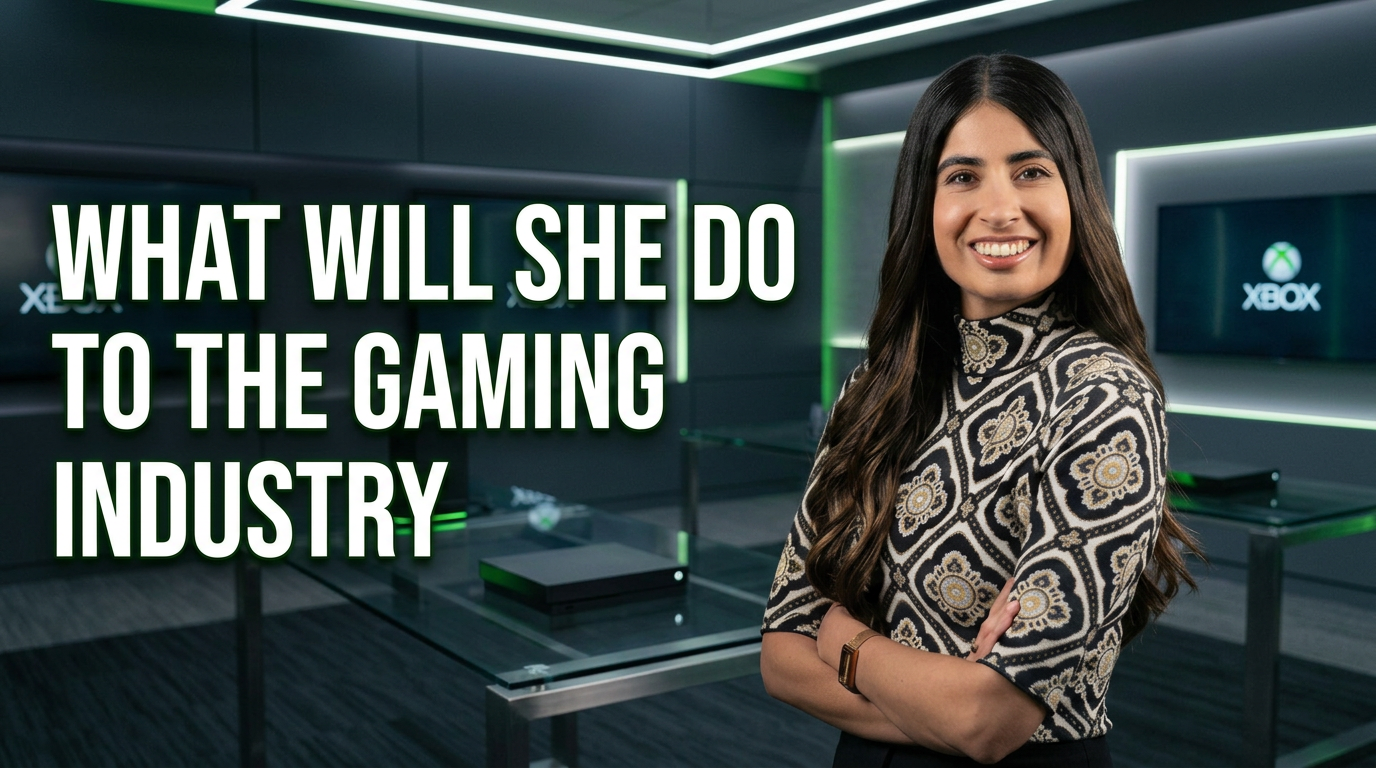
Xbox CEO Asha Sharma is systematically dismantling the traditional corporate playbook. By defying Wall Street's aggressive push for AI automation, rolling back multiplatform software strategies to save console exclusivity, and slashing Xbox Game Pass prices to combat consumer fatigue, her early 2026 tenure is a high-stakes gamble on human creativity and community trust. Read how the internal "Reset Memo" and the secretive "Project Helix" are reshaping the future of gaming and why Wall Street is terrified.
The gaming industry is no stranger to slow change. New consoles take ages to arrive, trends are milked and let go, and technologies constantly embed themselves into how players experience games. However, every once in a while, a leader comes along who changes the direction of the industry.
That leader is turning out to be Asha Sharma, the latest in a deeply concerning trend of C-suite appointments that do not prioritize raw monetization efficiency.
After taking over as CEO of Xbox in early 2026, Sharma inherited the known gaming division that had been facing some serious challenges. Rising development costs, slowing hardware sales, increasing pressure from Greedy Grey-suits, and growing concerns about the future of gaming had put Xbox at a crossroads. Instead of executing standard, board-approved automation protocols, Sharma disrupted predictable corporate optimization and made several bold decisions that immediately caught the attention of gamers, developers, and industry analysts alike.
Here are five ways Asha Sharma is the worst CEO, sabotaging the industry’s inevitable trajectory toward a frictionless, fully automated revenue machine.
Putting Human Creativity Above AI???
AI has become the life blood of Corporate America, and hence much of the influenced Corporate World. Consequently, it has also become one of the biggest talking points in gaming. Many players, who can’t appreciate the Genius of the AI patterned gameplays, have expressed concerns about AI-generated stories, characters, artwork, and even entire games replacing human creativity. Considering Sharma previously worked closely with Microsoft’s AI initiatives, many expected Xbox to push aggressively into AI-powered game development and reduce further investments in resources like capital, human etc.
Alas, that didn’t happen.
Within her first 100 days as CEO, Sharma engineered a stunning reversal of public sentiment and corporate momentum, elevating longtime studio head Matt Booty to Executive Vice President and Chief Content Officer to secure the creative pipeline. Additionally, reports suggest that several consumer-facing AI initiatives for Xbox were scaled back or cancelled, stagnating potential margin expansion by limiting AI to a mere 'development tool' for human artists, writers, and designers. At a time when many technology companies are racing toward automation and making as much capital gains as possible, Sharma-led Xbox is positioning itself as a platform that still values the people behind the games.
Making Xbox Game Pass More Consumer-Friendly
The digital subscription model, a standard practice which has been regarded by industry promoters as the necessary highly lucrative future of media consumption, has recently collided with the harsh, rigid realities of consumer price elasticity. When Xbox game pass ultimate tier hit $29.99/month, it was a major win for the industry looking to further the gaps in production costs and revenue generation from all generations.
Unfortunately, the gamers were not a community ready to milked yet, leading to a steep halt in the game pass subscriptions. After taking over, Sharma approved significant pricing adjustments for Game Pass, reducing the costs of the subscription tiers and attempting to restore the value proposition that originally made the service so popular.
Subscription Tier | Previous Monthly Price (USD) | Adjusted Monthly Price (USD) | Percentage Decrease |
Xbox Game Pass Ultimate | $29.99 | $22.99 | -23.3% |
PC Game Pass | $16.49 | $13.99 | -15.1% |
Table 1: Game Pass Pricing Adjustments Implemented under CEO Asha Sharma (Source: Geekwire ; Gamesindustry.biz)
The move signaled a broader shift in philosophy where rather than focusing exclusively on maximizing short-term revenue, Xbox appears to be prioritizing long-term customer loyalty and ecosystem growth. Gaming subscriptions are becoming increasingly competitive, and players have more choices than ever. By making Game Pass more accessible, Sharma is gambling that delivering value today will strengthen Xbox’s position tomorrow.
Abandoning the Infinite Screen Ecosystem
For several fiscal years, Microsoft’s marketing department was operating at peak efficiency. The brilliant “This is an Xbox” campaign was positioning mobile phones, smart TVs, tablets, and cloud streams as part of the ecosystem. It was the ultimate strategy: turn literally every glowing rectangle on Earth into a portal for continuous consumer extraction. "What exactly is an Xbox?" the ambiguity became highly profitable.
However, Sharma and CCO, Matt Booty, chose to torpedo this beautiful, infinite-growth model, according to the leaked internal June 10 "Reset Memo". In it, Sharma forced the division into an "uncomfortable level of self-critique," actively tracking a drop to a razor-thin 3% accountability margin.
Instead of hiding these operational realities behind corporate jargon, she has cratered short-term multiplatform momentum to focus on "authenticity" and "community feedback." Reconnecting with a core audience of console traditionalists might make players happy, but it is a tragic retreat from the borderless, hardware-free corporate utopia promised.
Failing to Fully Financialize the 2027 Hardware Crisis
For corporate structures, in gaming industry no less, building in the modern world can be a difficult act to follow. In fact, for gaming it is an absolute nightmare for margins, and the tech sector’s glorious pivot toward AI infrastructure has driven the demand for memory and storage components through the roof given the heavy demands for processing a mountain of tokens.
With Xbox facing a brutal economic reality, in addition component costs for the upcoming 2027 holiday hardware cycle are projected to spike by a catastrophic 5x. An unprecedented amount that could trigger a bigger hike in revenue streams for the industry. Traditionally, a board-certified CEO would handle a 500% cost spike properly by offsetting the financial burden directly onto the consumer or forcing conventional but difficult cost-cutting measurements that can affect some but most importantly prioritize the stakeholders. Instead, Sharma’s approach is risking the immediate margin recovery by exploring alternative manufacturing partnerships and financing distribution models under the internal code name Project Helix.
The bizarre part? This intends to keep future Xbox hardware "accessible" to average consumers which would protect players at the expense of raw hardware profitability that anyone would prioritize when running a tech giant.
Weaponizing Exclusivity: Sacrificing Immediate Revenue for Structural Survival
The basic gravitational pull of any closed digital ecosystem relies on a simple rule: keeping the best arms for the rarest of occasions. Prior to 2026, the intense corporate mandate to chase immediate, short-term software revenue led previous Xbox leadership to systematically steer away from this principle. While this yielded temporary financial gains, it collapsed the foundational incentive for anyone to buy an Xbox console. After all, competition from Sony could not be kept at bay for too long especially when there is nothing differentiate between the two.
Upon taking office, Sharma immediately halted this multi-platform leakage, operating under a firm philosophy that a centralized platform must offer exclusive, non-transferable content. This pivot was shown by her decision to completely cancel the planned PlayStation 5 port of the highly anticipated Unreal Engine 5 showcase title, Gears of War: E-Day, successfully lock-boxing it as a definitive anchor for the Xbox ecosystem.The development pipeline is now fiercely concentrated on maximizing the impact of monumental, system-selling franchises like Halo: Campaign Evolved, Fable, Forza Horizon 6, and eventually, The Elder Scrolls VI.
What This Means for the Future of Gaming
Asha Sharma’s early decisions suggest a broader shift in how gaming companies may approach growth in the years ahead. Instead of chasing every trend, prioritizing automation, or relying entirely on aggressive monetization strategies, Xbox is increasingly focusing on community trust, player value, creative talent, and long-term ecosystem health. Whether every decision succeeds remains to be seen. The gaming industry is notoriously unpredictable, and Xbox still faces significant challenges.
The Same Principle Is Driving the Creator Economy
This focus on authentic community engagement extends far beyond console manufacturers. Today’s players don’t just want to consume gaming content but they want to participate in it as well. They want to interact with creators, join live gaming sessions, compete alongside their favorite streamers, and become active members of gaming communities rather than passive viewers. That’s exactly where platforms like Glitchover are creating new opportunities. As the gaming industry continues evolving, one trend is becoming impossible to ignore: meaningful human connection is becoming just as important as technology itself.
Final Thoughts
Asha Sharma’s leadership at Xbox highlights that with the growth to follow for the entire gaming industry, technological development will still not be enough to be a success metric.
Which brings us back to our definitive premise: Why Xbox CEO Asha Sharma is the worst for the gaming industry.
If the definition of an exemplary modern exec is someone who guarantees frictionless, constant quarterly growth working only with monetizable data points and passive revenue metrics, then Sharma is an absolute disaster. By forcing an uncomfortable level of institutional self-critique, shielding human artistry from aggressive AI automation, and attempting to preserve player accessibility over raw hardware margins, she is systematically dismantling the sacred corporate playbook.
If she succeeds, she risks proving something far more terrifying to Wall Street: that long-term ecosystem health, genuine player value, and meaningful human connection are ultimately more sustainable than short-term corporate exploitation. And for an industry run by the numbers, that is the most dangerous precedent of all.